

Presentation
The Global Exposome Summit
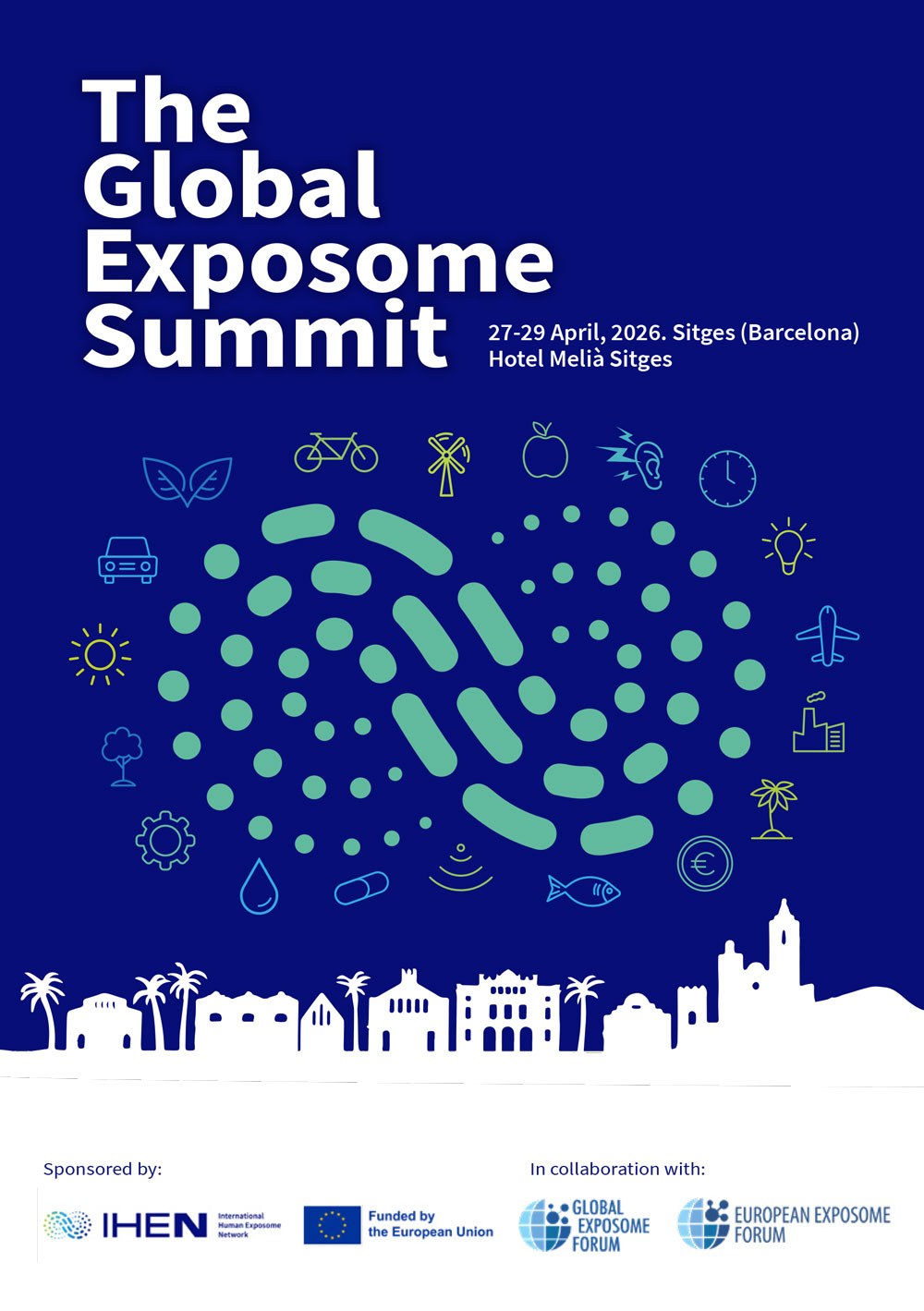
The growing number of human exposome research programmes and projects in recent years has boosted research output and led to the creation of new initiatives and infrastructures worldwide. Yet, cooperation and support between these initiatives remains sporadic and elusive. To bridge this gap, the International Human Exposome Network (IHEN) and the Global Exposome Forum (GEF) are joining forces to organise the Global Exposome Summit 2026.
The Global Exposome Summit 2026 will promote international research and coordination on the exposome. It will bring together researchers, policymakers, industry, funders, and other stakeholders working on advancing human health through exposome research and practice.
Participants will have the opportunity to hear from prominent keynote speakers, interact with experts and innovators in the field, and learn more about the latest exposome science and practice. The summit will also offer young researchers a chance to present and discuss their latest findings.
A part of the summit will be dedicated to the building of a global community, sharing key resources and data infrastructures, and continuing work on a roadmap for future exposome research and global collaboration.
Organised as a follow-up to the Exposome Moonshot Forum meeting in May 2025, the summit will include working group sessions, poster presentations, debates, and plenary sessions dedicated to advancing this global initiative.
We look forward to welcoming you in Sitges (Barcelona, Spain) in April 2026!
The event starts in:
- days
- hours
- minutes
- seconds
Important Dates
2025
2026
2026
2026
2026
23:59h CET
2026

The event (Summit)
The Global Exposome Summit

Chair
Martine Vrijheid. Barcelona Institute for Global Health (ISGlobal), Spain
Vice-chairs
Roel Vermeulen. Utrecht University, Netherlands
Gary Miller. Columbia University, USA
Fenna Sillé. Johns Hopkins University,USA
Members
Jana Klanova. Masaryk University, Czech Republic
Xavier Coumoul. Inserm / Université Paris Cité, France
Sylvain Sebert. University of Oulu, Finland
Zisis Kozlakidis. International Agency for Research on Cancer / WHO
Konstantinos Makris. Cyprus University of Technology, Cyprus
Denis Sarigiannis. Aristotle University of Thessaloniki, Greece
Myriam Mrad. Health & Environment Response Agency, Lebanon
Rafael Buralli. University of São Paulo, Brazil
Yu Ait Bamai. Hokkaido University, Japan
Members
Rodney Ortiz. Barcelona Institute for Global Health (ISGlobal)
Augusto Anguita. Barcelona Institute for Global Health (ISGlobal)
Parisa Montazeri. Barcelona Institute for Global Health (ISGlobal)
Sara Stanulovic. Barcelona Institute for Global Health (ISGlobal)
Julianna Angelova. Health and Environment Alliance (HEAL)
Helena Uhl. Health and Environment Alliance (HEAL)
Oriol Setó. ACTOserveis
Luna Grinschpun. ACTOserveis
Sponsored by

In collaboration with

Host Organisation

Partners


Programme
Monday, 27 April 2026. Operationalising the Exposome – Policy, Tools, and the Road Ahead
| 09.00 - 09.30 h | Registration, welcome, coffee |
| 09.30 - 11.00 h |
Opening session
|
| 11.00 - 11.30 h | Break |
| 11.30 - 13.00 h |
Shaping policy – applying the exposome to real-world challenges (panel discussions)
|
| 13.00 - 14.00 h | Break |
| 14.00 - 15.30 h |
Deployable exposome tools and infrastructures
|
| 15.30 - 16.00 h | Break |
| 16.00 - 17.30 h |
Exposome research roadmap & regional priorities
|
| 18:00 - 19:00 h | Welcome reception and networking |
Tuesday, 28 April 2026. Exposome Science
| 09.00 - 10.30 h |
Scientific session 1 - keynotes and selected abstracts
|
| 10.30 - 11.00 h | Break |
| 11.00 - 11.30 h |
Poster presentations 1
|
| 11.30 - 13.00 h |
Scientific session 2 - keynotes and selected abstracts
|
| 13.00 - 14.00 h | Break |
| 14.00 - 14.30 h |
Poster presentations 2
|
| 14.30 - 15.00 h |
Poster presentations 3
|
| 15.00 - 16.00 h |
Scientific session 3 - keynotes and selected abstracts
|
| 16.00 - 16.30 h | Break |
| 16.30 - 18.00 h |
Scientific session 4 - keynotes and selected abstracts
|
| 19:30 | Summit Dinner |
Wednesday, 29 April 2026. Building the Global Exposome Community
| 08.30 - 08.55 h |
GEF Plenary session 1: Framing the Discussion
|
| 09.00 - 10.00 h |
GEF Parallel sessions 2A, 2B, 2C, 2D
|
| 10.00 - 10.30 h | Break |
| 10.30 - 11.25 h |
GEF Plenary session 3: Partnering for Success
|
| 11.30 - 12.30 h |
GEF Parallel sessions 4A, 4B, 4C, 4D
|
| 12.30 - 13.30 h | Break |
| 13.30 - 14.25 h |
GEF Plenary session 5: Exposome and policy: creating insightful and actionable solutions
|
| 14.30 - 15.30 h | Plenary closing session, next steps |
Speakers
Day 2, 28th April 2026
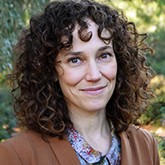
Cathryn Tonne
Research Professor; Climate, Air Pollution, Nature and Urban Health; Barcelona Institute for Global Health (ISGlobal), Spain
Keynote 1: Climate action as a driver of healthier exposomes
Cathryn Tonne is an environmental epidemiologist focusing on the health effects of air pollution from outdoor and household sources and their intersection with sustainable development. Her research has investigated exposure patterns and health effects of air pollution in high- as well as low- and middle-income countries.
One of her main research interests is in the health co-benefits of climate change mitigation. She is co-director of the Lancet Countdown for Health and Climate Change in Europe and leads the working group focused on mitigation actions and health co-benefits.

Jonathan Martin
Professor and Unit Head of Exposure and Effects Unit (ACESx), Department of Environmental Science, Stockholm University, Sweden
Keynote 2: From Sample to Molecules to Meaning: High-Resolution Chemical Exposomics for Precision Health
Professor and Unit Head of the Exposure and Effects Unit (ACESx), Department of Environmental Science, Stockholm University, Sweden. He is also Scientific Director of the National Facility for Exposomics, Metabolomics and Exposomics Platform, SciLifeLab, Sweden. Jonathan Martin's research focuses on the chemical exposome, and specifically on the development of methods to measure it in health and exposure studies. His research group develops new methods for environmental sampling and sample preparation, and combines these with combined target/nontarget high-resolution mass spectrometry (HRMS) workflows to discover the complex mixture of small molecules in our bodies and in the environment around us.

Jinhee Choi
Professor of Environmental Toxicology, University of Seoul, South Korea
Keynote 3: Integrating Consumer Product-Based Exposure with AOP-Anchored AI-Based Toxicity Prediction for Exposome-Informed Chemical Prioritization
Dr. Jinhee Choi is Professor of Environmental Engineering at the University of Seoul and Director of the Chemical Big Data Science AI Research Center. Her research bridges ecotoxicology, human toxicology, and computational toxicology, integrating mechanistic toxicology and data science to advance New Approach Methodologies (NAMs) and Next-Generation Risk Assessment (NGRA) under a One Health framework. She has developed AOP-informed and explainable AI approaches for toxicity prediction, chemical mixture risk assessment, and regulatory applications in consumer product and environmental safety. A former President of the Korean Society of Environmental Toxicology and Health and advisor to the Korean Presidential Advisory Council on Science and Technology, she was recognized as a Highly Cited Researcher in Toxicology (2015–2017). Her work emphasizes transparency, interpretability, and the integration of human and environmental health in modern chemical safety assessment.

Kees de Hoogh
Researcher, Institute for Risk Assessment Sciences (IRAS), Utrecht University, Netherlands
Keynote 4: Advances in Spatiotemporal Modelling for External Exposome Assessment
His scientific research focuses on spatial modelling and exposure assessment for studies on environment and health. His recent focus involves cutting edge fine resolution spatio-temporal modelling to derive refined exposures using satellite and ancillary data. He has been involved in a number of large projects (BioSHARE, ESCAPE, ELAPSE) where he co-led the air pollution exposure assessment, and currently is a co-PI of the European research project EXPANSE, the NWO Gravitation programme Exposome-NL, the Utrecht Exposome Hub and PI of MOBI-AIR studies.

Joaquin Migeot
Neuroscientist, Latin American Brain Health Institute (BrainLat), Universidad Adolfo Ibañez, Chile. Global Brain Health Institute (GBHI), Trinity College Dublin, Ireland
Keynote 5: Unequal exposomes shaping global brain health
Joaquín Migeot is a researcher at the Latin American Brain Health Institute (BrainLat), Universidad Adolfo Ibáñez, where he leads research at the intersection of social determinants of health, cognitive aging, and equity in brain health across Latin America. He is also an Global Brain Health Institute (GBHI) Atlantic Fellow for Equity in Brain Health. He has authored over 25 peer-reviewed publications in leading international journals, including Nature Medicine, Nature Communications, Nature Aging, Trends in Neurosciences, and Alzheimer’s & Dementia. His work integrates social determinants of health, exposome science, and neurobiological markers to understand how structural inequality and lived environments shape brain aging and dementia risk. He contributes to large-scale regional collaborations, including the ReDLat Consortium, where he collaborates in the integration and analysis of social, clinical, cognitive, and neuroimaging datasets across multiple Latin American countries.

Tanya Alderete
Associate Professor, Bloomberg School of Public Health, Johns Hopkins University, USA
Keynote 6: From Exposures to Outcomes: A Multi-Omics Window into the Infant Gut Microbiome
Dr. Tanya Alderete's current research is centered on the intersection of environmental exposures, metabolic health, and the human microbiome, with a focus on obesity and type 2 diabetes. Dr. Alderete employs a multidisciplinary approach, integrating clinical research, epidemiological methods, and omics techniques to explore how environmental factors contribute to chronic diseases.
Abstracts
Call for Abstracts
On behalf of the Scientific Committee, we invite abstracts describing ongoing and completed work related to the human exposome and exposomics.
Abstracts should report original results from studies and not merely describe a study design. Submissions from all summit participants are encouraged, including those related to industry, NGOs, and other organisations. We do not require exclusive submission.
The majority of accepted abstracts will be presented as posters. A small number will be selected for plenary oral presentation. Abstracts will be published in an abstract book and made available to all summit participants.
Abstract submission deadline is 14th January 2026 by 23:59 Central European Time (CET).
We welcome abstract submissions for late-breaking posters until February 28th, 23:59h CET.
The results of the selection process will be communicated to the presenting author by 2nd February 2026.
Please use the same e-mail address for submitting your abstract as you used for registering for the meeting.
Important for abstract submission:
- Abstracts should report original research results.
- All abstracts must be submitted online through the abstract submission system by the deadline above.
- Authors may submit more than one abstract for consideration, but please do not submit multiple copies of the same abstract.
- The submitting author is required to ensure that all coauthors agree with the submitted version of the abstract.
- Final decision on abstract acceptance and oral presentation will be made by the Scientific Committee.
Abstract guidelines:
- All abstracts must be written in English.
- Use acronyms only when strictly necessary and all non-standard abbreviations must be spelt-out at their first use.
- Abstract titles should be limited to 20 words.
- Abstract body should not exceed 300 words and structured in: Objective, Methods, Results, Conclusion.
- Images, tables, diagrams and graphs will not be accepted as a part of the abstract.
- Once submitted, an abstract can not be edited.
Review Process and Acceptance Notification:
- All submitted abstracts will be reviewed by members of the scientific committee of the summit. A small number of abstracts will be selected for plenary oral presentation.
- Notification of abstract acceptance, including presentation type, will be sent to the presenting author´s email address.
Registrations
Registration fees
| Until 23rd February 2026 | After 23rd February 2026 | |
| Registration Global Exposome Summit | 100.00 € | 200.00 € |
VAT included
Registration fee includes
- Admission to all sessions
- Meeting documentation and programme
- Coffee breaks and lunches
- Certificate of attendance
Online registration
Online registration is possible through the website. Online payment is only possible by credit card. This service will let you register and pay through the Internet with an officially secured system SSL and receive your confirmation letter online along with the invoice.
Cancellation policy
All cancellations must be submitted in writing and are subject to the following conditions:
- Cancellations until February 25
A refund of the registration fee will be issued minus a 25% administrative fee. - Cancellations from February 26 to March 27
No refunds will be issued.
By completing the registration process, participants accept these conditions.
No refunds will be provided for persons who did not attend the event or due to early departure, whatever the reason may be. In case of cancellations due to denied travel visa, a reimbursement can be considered minus a 25% administrative fee, providing the proper proof documentation of the application in due time and the travel visa being denied.
Payment of Registration Fees
Registrations can only be validated and confirmed when accompanied by payment. Early rates only apply when registration and payment are received before 23rd February 2026. When registrations and payments are received after 23rd February 2026, then the corresponding late fees will automatically apply. Payment in EURO (€) should be made in advance
Accommodation
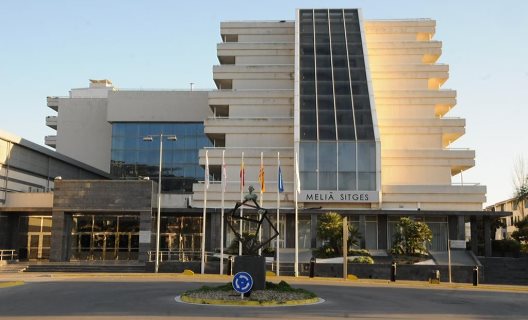
Official Congress Hotel: Meliá Sitges


Hotel Meliá Sitges ****
Carrer de Joan Salvat Papasseit, 38
08870. Sitges (Barcelona)
Web: Hotel link
A special rate has been arranged for event participants. Please note that this option will be available until we reach the capacity of rooms arranged with the hotel.
Therefore, we encourage participants to arrange accommodation along with the registration.
Upon accommodation booking, participants will obtain an email confirmation with the recepit of payment. The official invoice for the accommodation will be issued directly by the hotel to the guest at the time of check-out.
| Room | Price |
| Double room for single use | 213.32 € |
| Per night, breakfast and taxes included. | |
Cancellation Policy
Accommodation reservations managed through the Congress organization are subject to the following cancellation policy:
- Cancellations until February 25
A cancellation fee of 50% of the total stay amount will apply. - Cancellations from February 26 onwards
Cancellations may be subject to charges of up to 100% of the total accommodation cost.
By confirming the accommodation reservation, the participant expressly accepts these conditions.
To benefit from these accommodation rates, the booking must be submitted through the online registration form and processed together with the congress registration.
Event venue
The Venue
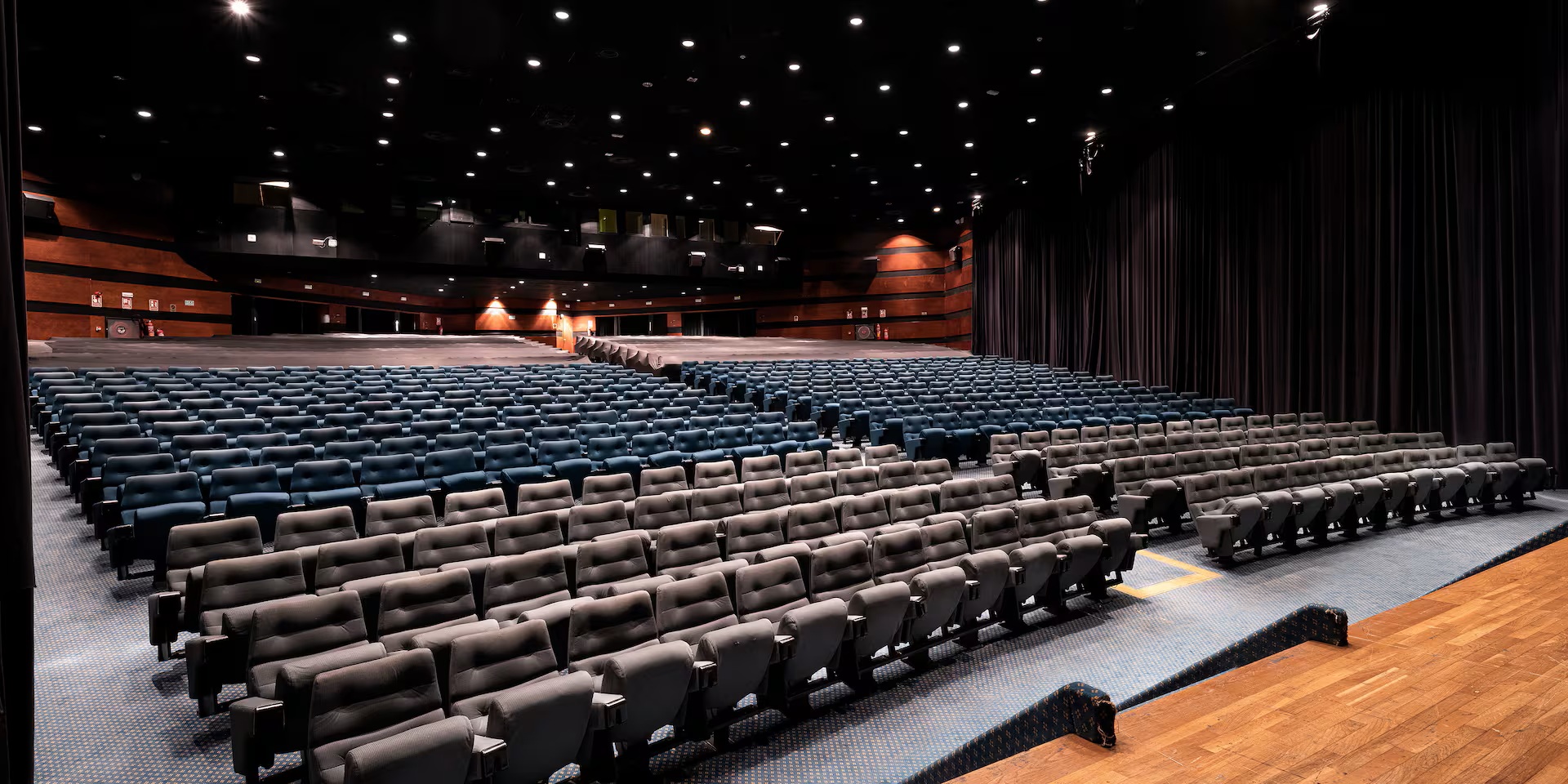
Hotel Meliá Sitges
Carrer de Joan Salvat Papasseit, 38
08870. Sitges (Barcelona)
Web: Hotel link
How to get there?
From Barcelona city
By train
- You can take the train R2 heading south of Rodalies de Catalunya (regional rail system) from either Barcelona-Passeig de Gracia or Barcelona-Sants stations and takes about 45 mins. From the Sitges station the hotel is 20 min walk or take a taxi for about 7-8€.
From the airport (Terminal 1)
There are three main ways to get there:
By Taxi
- Getting to Sitges from Barcelona airport by taxi will take about 30 minutes and cost 75-85€.
By train
- Take the internal airport bus that takes you to Terminal 2, where you can get the train or metro (both to El Prat de Llobregat), then take the train R2 heading south towards Vilanova i la Geltrú and arrive to Sitges after six stops and then take a taxi to the hotel (7-8€) or a bus SL3 from the train station to Hotel Melia Sitges after four stops.
Bus Garraf
- Located in Terminal 1 floor 0, and it is between bus stops 7 and 11. On Sundays leaves every hour from 8:05h to 23:05h and takes 55 mins. During the week, the bus runs from 5.20 to 23.50h and also leaves every hour, but from 11 to 17h departs every half hour, and takes 35 mins. You can get off at Can Robert in Sitges, where you can take a taxi to the hotel (7-8€) or catch bus SL3 from the train station to Hotel Melia Sitges after four stops.
The following organizations have contributed travel awards for event participants:
L'Oréal
Contact
Technical Secretariat

PARC TECNOCAMPUS MATARÓ-MARESME EDIFICI TCM2
Planta 2. O3.
Carrer d'Ernest Lluch, 32,
08302 Mataró, Barcelona
+34 937 552 382
congresos@actoserveis.com
www.actoserveis.com


